At Two Birds, we get asked a lot about the differences between traditional and self-publishing, and where we think the two paths are headed. Sometimes we work with writers who are preparing to head out into the “query trenches” of trad publishing, but we mostly work with “indies,” or writers who want self-publish their books. Because of this, you could argue we have a narrower view of what’s happening out there in the publishing world than some other editors, but even so, we see changes happening. Not that publishing has ever stood still for very long — tastes and technology change too quickly for that.
Here are a few thoughts on what we’ve been seeing lately.
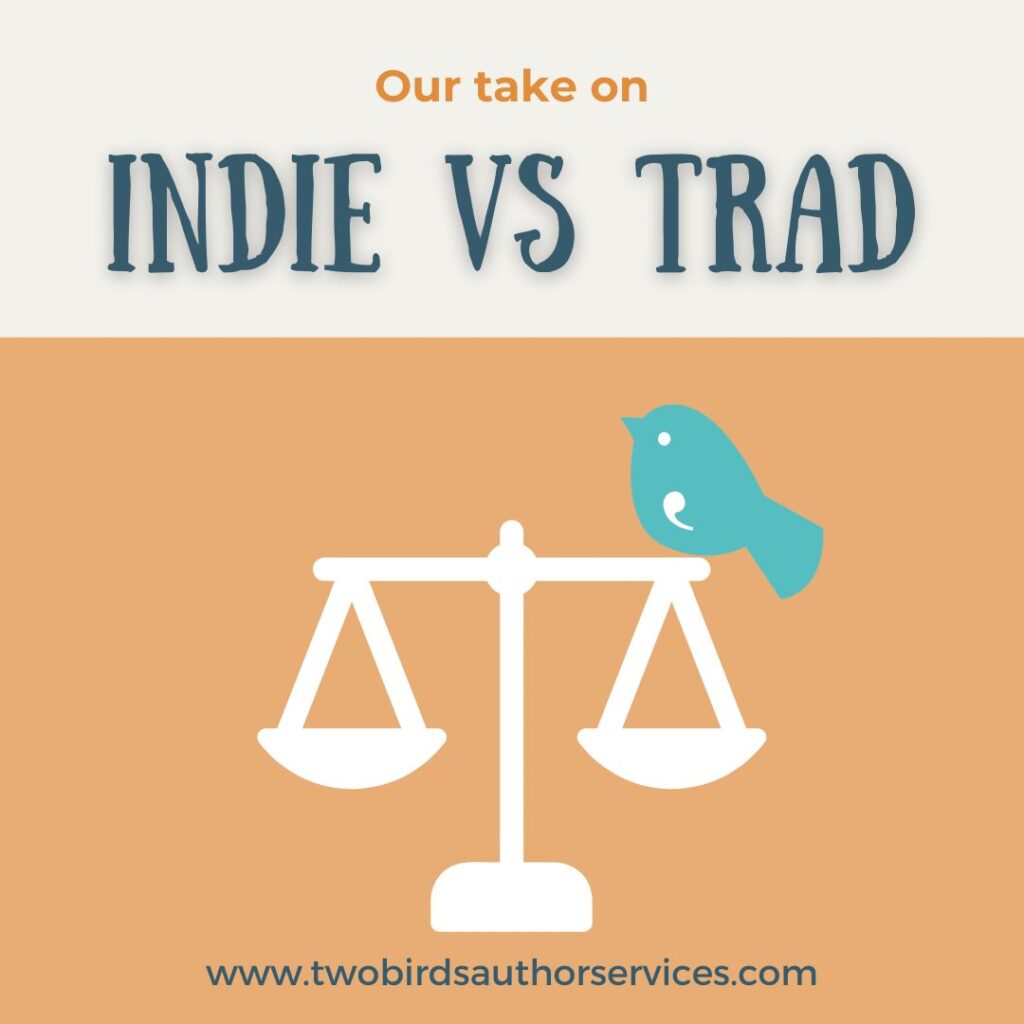
The self-publishing versus traditional route — which way should you go?
Reports of indie authors getting traditional book deals are on the rise. It makes sense — a publisher might feel they’re making a safer bet on an author who has already managed to write good books, market them successfully, and create a following. That’s not to say publishers will stop picking up debut authors with no track records, but it stands to reason those books will need to be even more exceptional.
In many spaces, self-publishing is considered a path of last resort, when an author isn’t able to secure an agent or a book deal. But for many writers, self-publishing is their first choice, providing more freedoms than the traditional route. In any case, the pros and cons between the two may be blurring. And that means indie vs trad may be a more fluid choice rather than an either-or decision.
Quality vs. speed
For many years, writing fast ruled the indie publishing world, particularly in genre fiction. The term “minimum viable product” became a thing — write a series, and get the next book out as fast as you humanly can. However, this approach has proven to be unsustainable for many writers and can lead to burnout. Quality is often sacrificed for speed with this model. And now that AI is here, how can someone who doesn’t use it have any chance of keeping up?
Some readers view books as commodities, something to consume and move on to the next one. They are voracious, but can also be demanding! Think about your ideal reader. What are their tastes? What is important to them?
Perhaps this means the pendulum will swing toward putting out fewer books, but of better quality. It’s another legitimate way to differentiate yourself. Demand for well-written stories will never go away.
Marketing
It used to be that if you had a trad deal, you could count on getting plenty of marketing support from your publishing house. That is changing. Of course publishers have access to distribution channels that indie writers don’t (lookin’ at you, Barnes & Noble), but writers with traditional deals often have to do their own advertising as well as marketing. Writers across the board should have a platform, which might include a social media presence, but for sure should include a newsletter and website. Everyone needs to invest in marketing, regardless of publishing model.
The AI conundrum
One of the biggest areas of contention in the writing world (okay, probably THE biggest?) is the use of AI. Some writers embrace it; others eschew it. Still others have turned it into their entire business model.
By its definition, generative AI has no new ideas — it just remixes whatever’s been fed into it. It’s predictive, guessing at what comes next. It’s been proven to flatten tone and writing, and it’s also occasionally nonsensical. It has tells. These facts should be considered when deciding how you want to approach this touchy subject. (Two Birds doesn’t use it, and doesn’t edit AI-generated manuscripts; we’ll be releasing more on this soon.)
Regardless of where you stand on the issue, there’s no denying it’s affected the publishing industry and it’s not going away. It’s our belief that a group of readers will emerge (if it hasn’t already) for whom it’s important to know the book they’re buying was conceived of and written by a Real Human Being ™. How you decide to create might factor into which route you decide to take to get your book into the world.
Your stance on AI could be part of your marketing plan. Coming out with an AI statement, explaining how you use it — or why you don’t use it — can be a way to differentiate yourself. Declaring and showing that your books are written by a real human could be a huge boon.
The takeaway
The differences between self-publishing and indie publishing are flattening. It’s less about who puts your book out and more about how good your book is. And by good, we mean the coherence of your story, your character development, the quality of the writing, the book cover… Just to name just a few things.
Here at Two Birds, more writers are coming to us for guidance regarding story and plot. We’re seeing more articles about getting back to the basics of good storytelling to help create demand. We see more authors choosing to take their time to release well-edited and well-positioned books.
The way forward is clear: whichever path you chose, writing a great book, connecting with readers in meaningful ways, and promoting your unique personal brand is what will contribute most to your success.
Have questions about the editing process? We’d love to chat with you and help you figure out your next steps. Contact us to set up a free sample edit.
Sign up to receive our Substack newsletter to get the latest updates and posts delivered straight to your Inbox.